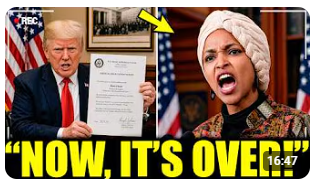
The video titled “Ilhan Omar Resignation INEVITABLE after Supreme Court DROPS NIGHTMARE Ruling” presents a dramatic, emotionally charged narrative centered on Rep. Ilhan Omar, a recent CBS interview, and broader political tensions in the United States. While the video uses sensational framing, the underlying themes reflect ongoing debates about political accountability, media pressure, and public perception.





This article breaks down the video’s structure, the claims it highlights, and the rhetorical techniques it uses to shape the viewer’s interpretation.
1. The Video’s Core Claim
The central message of the video is that Rep. Ilhan Omar is facing intense political pressure following:
- A contentious CBS interview in which she reportedly became emotional or frustrated
- Public criticism surrounding her comments about the assassination attempt on Donald Trump
- Broader scrutiny tied to allegations of welfare fraud in Minnesota, referenced through comments attributed to Treasury Secretary Bessent
The video frames these events as converging into what it calls an “inevitable resignation,” though it does not present verified evidence that such a resignation is actually underway.
2. How the Video Builds Its Narrative
The video uses a familiar structure common in political commentary channels:
A. Emotional Hook
It opens with dramatic language — “rage-quit,” “in tears,” “nightmare ruling” — to create urgency and emotional intensity.
B. Selective Highlighting of Events
The video emphasizes:
- Omar’s reaction during the CBS interview
- Her past statements about Trump
- Minnesota’s welfare fraud controversies
These elements are presented as interconnected, even though they originate from different contexts.
C. Interpretation Over Documentation
Rather than focusing on official statements, legal documents, or direct quotes, the video relies heavily on interpretation and commentary. This is typical of opinion-driven political content.
3. The CBS Interview Segment
According to the video’s description, the CBS interview is portrayed as a pivotal moment. The host, Margaret Brennan, is said to have pressed Omar on:
- Minnesota being labeled “ground zero” for welfare fraud
- Her previous remarks about the Trump assassination attempt
The video claims Omar became emotional or abruptly ended the interview. Without the full interview footage, it’s important to note that such descriptions may be exaggerated for effect.
4. The Supreme Court Angle
The title references a “nightmare ruling,” though the video description does not specify what ruling it refers to. This is a common tactic in political thumbnails and titles:
- Use a dramatic legal reference
- Imply direct consequences for a political figure
- Create a sense of crisis
The video appears to use the Supreme Court reference as a framing device rather than a detailed legal analysis.
5. Broader Political Context
The video taps into several ongoing national themes:
- Polarization: Omar is often a lightning rod for partisan criticism.
- Media pressure: High-profile interviews can become flashpoints in political narratives.
- Public distrust: Allegations of fraud or misconduct — even when unconnected — are often used to build broader narratives of corruption.
These themes resonate with audiences who already hold strong opinions about national politics.
6. What the Video Does Not Establish
While the video uses strong language, it does not provide:
- Verified evidence that Omar is resigning
- Direct confirmation of the emotional claims
- Specific details about the Supreme Court ruling referenced in the title
- Independent reporting to support its conclusions
This positions the video firmly in the category of political commentary rather than news reporting.
7. How Viewers Should Interpret Content Like This
Videos like this are designed to:
- Capture attention
- Reinforce existing beliefs
- Generate emotional engagement
- Drive views and subscriptions
Understanding this helps viewers separate commentary from verified information.
8. Why This Matters
Political videos with dramatic framing shape public perception, especially when they blend real events with speculative conclusions. Recognizing the difference between:
- What happened,
- What is being claimed, and
- How the narrative is being constructed
is essential for informed citizenship and healthy public discourse.
*Disclaimer: In 2026, the fake media is twisting the truth to fit their narrative. As American citizens, we find more truth on YouTube than in the major media outlets. The purpose of ExposingDemocrats.com is to help uncover the truth. Every video ARTICLE is generated using AI with this exact PROMPT: Create an article to explain this video: (copy/paste YouTube link). We do NOT edit or add anything to these video articles. WE ARE NOT ASSOCIATED WITH YOUTUBE. We are Americans trying to help save our country.