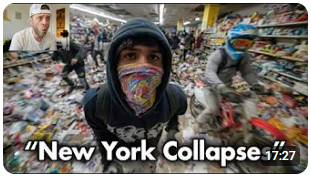
The video titled “Mamdani Legalizes Shoplifting… Wiping 8,400 Businesses Off the Map” presents a strong, opinion-driven take on crime policy—specifically retail theft—and its impact on small businesses.





At its core, the video taps into a growing national conversation:
What happens when enforcement weakens—and where is the line between reform and unintended consequences?
The Central Claim
The video argues that certain political policies—particularly those associated with progressive criminal justice reform—have effectively reduced penalties for shoplifting, creating an environment where theft becomes more common and less risky.
The headline claim is dramatic:
- Thousands of businesses have shut down
- Shoplifting has become widespread
- Enforcement is inconsistent or absent
Whether you agree or not, this framing reflects a real perception many business owners are voicing.
What’s Really Being Debated?
Let’s cut through the noise. This issue isn’t just about shoplifting—it’s about three competing priorities:
1. Criminal Justice Reform
Some policymakers argue:
- Minor theft shouldn’t lead to life-altering criminal records
- Over-policing harms communities
- Resources should focus on serious crime
This led to reforms like:
- Reduced penalties for low-level theft
- Bail reform policies
- Less aggressive prosecution for minor offenses
2. Business Survival
Small business owners see it differently:
- Repeated theft = real financial damage
- Insurance doesn’t always cover losses
- Employees face safety risks
For them, the issue is simple:
If stealing isn’t punished, it spreads.
3. Public Safety Perception
Even when data is mixed, perception matters:
- If people believe crime is rising, behavior changes
- Shoppers avoid certain areas
- Retailers close stores or relocate
That perception alone can reshape entire neighborhoods.
The “8,400 Businesses” Narrative
The video claims thousands of businesses have been wiped out.
Here’s the reality check:
- Store closures in major cities have increased in recent years
- Causes include:
- Theft
- Inflation
- Rising rent
- E-commerce competition
Blaming everything on shoplifting alone oversimplifies the situation—but ignoring theft as a factor is equally dishonest.
Why This Topic Is So Polarizing
This issue hits a nerve because it sits at the intersection of:
- Law and order
- Economic survival
- Political ideology
People tend to fall into two camps:
Camp 1: “Crime is being ignored”
- Laws are too soft
- Criminals face no consequences
- Businesses are paying the price
Camp 2: “The problem is exaggerated”
- Crime is being politicized
- Data doesn’t support extreme claims
- Reform is necessary for fairness
The truth?
Both sides are reacting to real concerns—but often exaggerating their case.
The Bigger Picture: Incentives Drive Behavior
Strip away politics, and one principle remains:
People respond to incentives.
If:
- Theft is easy
- Consequences are minimal
- Enforcement is inconsistent
Then theft will likely increase.
On the flip side:
- Overly harsh penalties can create long-term societal damage
That’s the balancing act policymakers are struggling to get right.
What This Means for Everyday People
This isn’t just a political argument—it affects real life:
For Business Owners
- Increased security costs
- Shrinking margins
- Hard decisions about staying open
For Families
- Fewer local stores
- Higher prices (losses get passed on)
- Reduced access to goods in certain areas
For Communities
- Empty storefronts
- Declining foot traffic
- Loss of local identity
Final Take: Reality Over Rhetoric
The video uses strong language and a clear angle, but it points to something real:
When policy, enforcement, and human behavior fall out of balance—systems break.
Here’s the grounded truth:
- Shoplifting is a growing concern in many areas
- Business closures are happening
- Policy decisions do influence behavior
But:
- The issue is more complex than one politician or one law
- Multiple economic and social forces are at play
Bottom Line
If you want a clear takeaway, it’s this:
You can’t ignore crime—and you can’t ignore context.
The real solution isn’t extreme in either direction. It’s:
- Smart enforcement
- Fair consequences
- Policies that protect both people and businesses
Anything less—and the cycle continues.
*Disclaimer: In 2026, the fake media is twisting the truth to fit their narrative. As American citizens, we find more truth on YouTube than in the major media outlets. The purpose of ExposingDemocrats.com is to help uncover the truth. Every video ARTICLE is generated using AI with this exact PROMPT: Create an article to explain this video: (copy/paste YouTube link). We do NOT edit or add anything to these video articles. WE ARE NOT ASSOCIATED WITH YOUTUBE. We are Americans trying to help save our country.