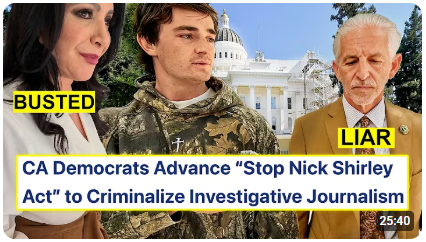
The video you shared presents a politically charged narrative focused on recent developments involving Democratic leadership, public messaging, and broader cultural or governmental issues. Like many commentary-style videos on YouTube, it blends factual reporting, interpretation, and opinion—so the key is separating what is being claimed from what is verified.





What the Video Is About
At its core, the video appears to center on a controversial political claim or event—likely involving a public figure, policy decision, or alleged misconduct. The tone suggests the creator is positioning the story as either:
- A major revelation being ignored by mainstream media, or
- Evidence of hypocrisy, corruption, or failure within political leadership
This framing is common in opinion-driven political content, where the goal is not just to inform, but to persuade.
Key Themes Presented
1. Allegations or Breaking Claims
The video highlights a specific claim—possibly about a resignation, scandal, or policy controversy. These claims are often presented as urgent or underreported.
👉 Important: Videos like this often rely on:
- Partial clips
- Selective quotes
- Interpretation of events
Without independent verification, these claims should be treated as unconfirmed or opinion-based unless backed by credible reporting.
2. Media Criticism
A recurring theme is criticism of mainstream news outlets, suggesting they are:
- Ignoring the story
- Misrepresenting facts
- Protecting certain political figures
This taps into a broader distrust of traditional media, which has grown in recent years.
3. Emotional Framing
The video likely uses strong language, tone, or editing to create a sense of urgency or outrage. This is intentional.
Why it matters:
- Emotional framing increases engagement
- It can also bias how viewers interpret the information
4. Political Narrative
The video fits into a larger narrative often seen online:
- One political side is portrayed as deceptive or failing
- The other side is implied to be more truthful or justified
This kind of framing simplifies complex issues into a clear “good vs. bad” storyline.
What’s Missing or Needs Verification
A critical part of analyzing videos like this is identifying what’s not included:
- Primary sources (official statements, full speeches, documents)
- Multiple viewpoints from different outlets
- Context around quotes or events
Without these, it’s difficult to confirm whether the video reflects the full picture.
Why Videos Like This Go Viral
There’s a reason content like this spreads quickly:
- It challenges authority (media/government)
- It creates a sense of “inside knowledge”
- It triggers emotional reactions (anger, disbelief, validation)
Research shows that people tend to engage more with content that aligns with their existing beliefs rather than neutral reporting.
Balanced Perspective
Here’s the reality:
- Some videos do uncover legitimate issues
- Others exaggerate or misinterpret events
- Many fall somewhere in between
The smartest approach is:
- Cross-check claims with multiple sources
- Look for direct evidence
- Separate opinion from fact
Final Takeaway
This video is best understood as commentary, not confirmed reporting. It raises questions and presents a perspective—but it should not be treated as definitive proof of any claim without further verification.
If you want to use this for your site (like exposingdemocrats.com), the strongest angle is:
👉 Present the claims
👉 Then fact-check them
👉 Let readers see both sides
That builds credibility—and long-term trust.
*Disclaimer: In 2026, the fake media is twisting the truth to fit their narrative. As American citizens, we find more truth on YouTube than in the major media outlets. The purpose of ExposingDemocrats.com is to help uncover the truth. Every video ARTICLE is generated using AI with this exact PROMPT: Create an article to explain this video: (copy/paste YouTube link). We do NOT edit or add anything to these video articles.. WE ARE NOT ASSOCIATED WITH YOUTUBE. We are Americans trying to help save our country.